 Business License
How to Choose the Right Cartridge Filter Housing: 3 Critical Steps Every Industrial Buyer Must Get R
How to Choose the Right Cartridge Filter Housing: 3 Critical Steps Every Industrial Buyer Must Get Right
The global industrial filtration market is undergoing a seismic shift. Valued at over $35 billion in 2025, it's projected to grow at a CAGR of 6.5% through 2032, driven by tightening environmental regulations, water scarcity, and the push for higher product purity in food, pharma, and electronics. Yet amid this growth, one component remains surprisingly misunderstood: the cartridge filter housing.
Too many procurement professionals treat the housing as a commodity—a simple metal vessel that holds the "real" technology (the cartridge). This is a costly mistake. In our 20+ years of manufacturing filtration equipment at YUBO, we've seen plants lose thousands of dollars annually not because of poor cartridge quality, but because the housing was mis-specified from day one.
The housing determines your flow efficiency, maintenance frequency, seal integrity, and even the lifespan of your pump. Get it wrong, and no amount of high-end cartridges will save your process.
So, where do you start? We've distilled the selection process into three non-negotiable steps. Master these, and you'll avoid 80% of the common pitfalls.
Step 1: Define Your Process Reality – Not Just the Spec Sheet
Every RFQ starts with a list: flow rate, micron rating, pressure, temperature. That's the baseline. But the hidden variables are what kill performance.
Ask the Right Questions
Before you even think about single or multi-cartridge, interrogate your application:
Fluid chemistry – Is it aqueous, hydrocarbon, acidic, or caustic? Trace impurities (like chlorides in water) can attack stainless steel over time, even if the main fluid seems benign.
Flow variability – What's your peak flow, not just average? A housing sized for average flow will choke during surges, causing premature pressure drop.
Temperature extremes – Do you have a CIP (clean-in-place) cycle that uses hot caustic? The housing must withstand that thermal shock repeatedly.
Contamination load – How much solid matter enters the filter per hour? This determines how quickly cartridges load up—and how many you'll need.
Operating schedule – Is your line 24/7 continuous, or batch-based? Continuous lines demand larger housings with longer service intervals to avoid unscheduled shutdowns.
The "Spike" Factor – Most Buyers Ignore This
A housing rated for 150 psi at 100°C might seem adequate. But what if your pump occasionally surges to 180 psi during startup? Or your steam sterilization hits 130°C for 15 minutes every shift? Those spikes stress seals, welds, and the housing wall. Always specify your worst-case scenarios—not just normal operation.
Real-world example: A chemical plant in Texas ordered 304 stainless housings for a glycol loop. The fluid was non-corrosive, but the plant used a chlorine-based biocide once a month. Within 18 months, pitting appeared around the weld seams. They switched to 316L, but the real fix was specifying a passivation re-treatment and a minimum wall thickness. The lesson: know your full chemical environment, including cleaning agents.
What We Need From You
When you approach YUBO for a quote, we don't just ask for microns. We ask:
Full fluid composition (including trace ions)
Maximum and minimum operating pressures
Ambient temperature range (if housing is outdoors)
Cleaning frequency and chemicals used
Target cartridge change-out interval
With that data, we can recommend a housing that's engineered for your actual conditions—not a generic catalog item.
Step 2: Single or Multi-Cartridge – The Right Architecture for Your Flow
Once you understand your process, the next decision is structural: how many cartridges should your housing hold?
This is the most visible differentiator in the market, and it's where buyers often overshoot or undershoot.
Single Cartridge Housing – Compact, Simple, Low-Cost
Ideal for: Low-flow applications (<10 m³/h), pilot plants, laboratory testing, small-scale batch production, or sidestream filtration (e.g., a small bypass loop).
Advantages: Minimal footprint, easy cartridge changes (one element to swap), lower upfront investment, and simple sealing.
Limitations: Limited surface area means faster pressure drop if flow increases. Maintenance intervals are shorter because the entire flow passes through one element.
Multi-Cartridge Housing – High-Capacity, Long-Run, Cost-Effective at Scale
Ideal for: Industrial water treatment, chemical processing, continuous manufacturing, food & beverage production, and any process requiring >20 m³/h or 24/7 operation.
Advantages: Multiple cartridges share the flow, reducing velocity and extending cartridge life. Fewer change-outs per year means lower labor and disposal costs. The larger vessel also provides better dirt-holding capacity.
Trade-off: Higher initial capital cost and a larger footprint. But the total cost of ownership (TCO) over 3–5 years is almost always lower than a single-cartridge setup for high-flow lines.
The "Security" Variant – A Special Case
Some housings are designated as security or final filters. These are usually single-cartridge units placed just upstream of sensitive equipment (RO membranes, heat exchangers, or precision pumps). They act as a "last chance" trap for particles that might have bypassed upstream filters. For this role, a simple, robust single housing is often perfect—even in large plants.
How to Choose? A Simple Decision Matrix
| Your Situation | Recommended Housing |
|---|---|
| Flow <5 m³/h, batch operation, limited space | Single cartridge (10" or 20") |
| Flow 5–20 m³/h, moderate contamination | Multi-cartridge (3, 5, or 7 cartridges) |
| Flow > 20 m³/h, continuous, high dirt load | Multi-cartridge (7, 21, or custom) |
| Protecting expensive downstream equipment | Single security housing (regardless of flow) |
YUBO's rule of thumb: If you're planning to run your line for more than 16 hours a day, choose a multi-cartridge housing. The extra investment pays back in reduced downtime and longer element life within 6–12 months.
Step 3: Cartridge Quantity and Length – The "Size" Trap
You've chosen single or multi. Now the next question: how many cartridges, and how long should they be?
This is where engineering precision meets operational reality. Get this wrong, and you'll either overpay for capacity you don't need or under-spec and face constant pressure drops.
Cartridge Quantity – More Isn't Always Better, But...
The number of cartridges directly affects:
Total filtration area – More cartridges = more media area = lower flow velocity per cartridge = lower pressure drop and longer life.
Maintenance frequency – With more cartridges, the dirt load is distributed, so each cartridge loads slower. That means longer intervals between change-outs.
Capital cost – Each additional cartridge adds material cost (the vessel must be larger) and increases the price.
Common standard configurations: 1, 3, 5, 7, 21 cartridges. For very high flows, we can custom-engineer vessels with 30, 40, or even 60 cartridges.
How to select the right number:
Start with your design flow rate and the clean pressure drop per cartridge (provided by your cartridge supplier).
Add the expected dirt load (grams per hour) to estimate how fast pressure drop rises.
Multiply by a safety factor (1.25–1.3) to ensure you stay within your pump's operating curve at the end of the cartridge life.
If the calculation suggests 4.2 cartridges, round up to 5—never down.
Cartridge Length – Why 40" Beats 10" in Most Industrial Cases
Standard lengths are 10", 20", 30", and 40" (with some metric equivalents). The key insight: longer cartridges provide more surface area for the same diameter, which reduces pressure drop and increases dirt-holding capacity.
| Length | Surface Area (approx., standard pleated) | Best For |
|---|---|---|
| 10" | 0.5–0.7 m² | Small systems, tight spaces, low-flow |
| 20" | 1.2–1.5 m² | Medium flow, general industrial |
| 30" | 2.0–2.5 m² | High-flow, moderate contamination |
| 40" | 3.0–3.8 m² | High-flow, heavy contamination, long runs |
The "space vs. performance" trade-off: A 40" housing is taller (roughly 1.5 meters for the vessel alone) and requires overhead clearance for cartridge changes. If your plant has low ceilings, 20" or 30" may be the practical limit. But if you have the headroom, go with the longest cartridge you can fit. The reduction in pressure drop alone will save energy costs over time.
Real-world example: A food processor switched from 20" to 40" cartridges in their multi-cartridge housings. The pressure drop at the same flow dropped by 35%, and cartridge life increased from 2 weeks to 5 weeks. The taller housing required a new platform, but the payback was under 8 months.
The Oversizing Principle – Always Add 25–30%
We cannot stress this enough: oversize your housing by 25–30% beyond your current flow requirements. Why?
Future production expansions won't require a new housing.
Pressure drop increases as cartridges load—a larger housing gives you a "buffer" so you don't hit the change-out threshold prematurely.
You can use higher-efficiency (tighter micron) cartridges later without reducing flow, because the extra area compensates for the tighter media.
Putting It All Together – The YUBO Advantage
Choosing the right cartridge filter housing isn't about picking the cheapest option or the one with the prettiest datasheet. It's about matching the architecture to your specific process—and we've just given you the three essential steps to do that.
At YUBO Filtration Equipment Co., Ltd., we've been designing and manufacturing stainless steel cartridge housings for over two decades. Our team doesn't just take orders—we partner with you to analyze your flow, your fluid, and your operational constraints. Then we deliver:
Standard housings (single or multi, 1–21 cartridges, 10"–40", SS304/316L/Duplex) ready for quick shipment.
Fully custom designs for non-standard pressures, connections, or dimensions.
Application engineering support to verify your sizing calculations and recommend the optimal configuration.
We've supplied to water treatment plants, chemical factories, pharmaceutical manufacturers, and food processors across 50+ countries. Our housings meet ASME, CE, and sanitary standards, and we back every unit with a comprehensive warranty.
Quick Sourcing Checklist – Use This Before You Order
| Factor | What to Confirm | Your Answer |
|---|---|---|
| Fluid type & chemistry | Main fluid + trace ions + cleaning agents | |
| Peak flow & pressure | Include spike conditions | |
| Temperature range | Operating + cleaning/sterilization | |
| Single or multi? | Based on flow, schedule, and future growth | |
| Cartridge count | Minimum number to meet flow + 30% buffer | |
| Cartridge length | Based on space and performance target | |
| Connection type | Thread, flange, or tri-clamp | |
| Material | 304, 316L, or Duplex (based on corrosion risk) |
Final Thoughts – Don't Leave It to Chance
The cartridge filter housing is the backbone of your filtration system. A poorly chosen housing costs you in energy, labor, downtime, and premature cartridge replacements. But when you take the time to define your process, choose the right configuration, and size it correctly, the housing becomes a silent workhorse that delivers consistent performance for years.
Ready to specify your next housing? Contact YUBO today with your flow and fluid details. Our engineers will respond with a detailed proposal, including pressure drop calculations, recommended cartridge count, and a 3D model of the proposed housing.
Let's build a filtration solution that works as hard as you do.
YUBO Filtration Equipment Co., Ltd. – Your Trusted Partner in Industrial Liquid Filtration
Recently Posted
-
Stainless Steel Wedge Wire Screen Filter Nozzle – Reliable Filtration for Water Treatment Systems
April 1, 2026Stainless Steel Wedge Wire Screen Filter Nozzle – Reliable Filtration for Water Treatment SystemsAre you looking for a filtr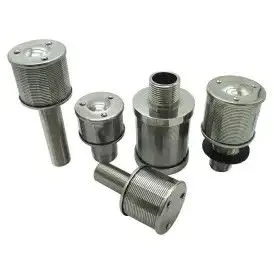 Read More
 -
Sieve Bend or Hydro Sieve? How to Choose the Right Curved Screen
March 27, 2026Sieve Bend or Hydro Sieve? How to Choose the Right Curved ScreenA sieve bend screen is a curved wedge wire screening pa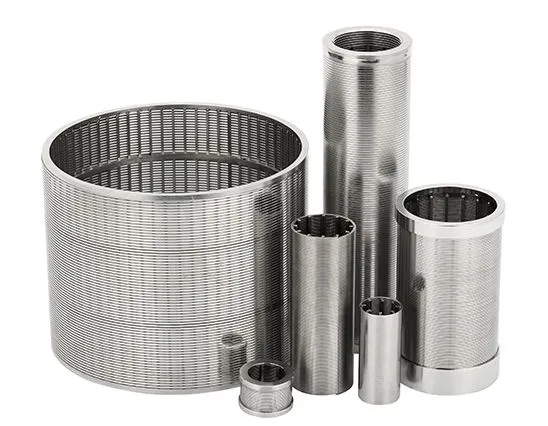 Read More
 -
How to Choose the Right Wedge Wire Screen for Your Industry
March 25, 2026Wedge wire screens are precision-engineered filtration components made from V-shaped stainless steel profile wires welded to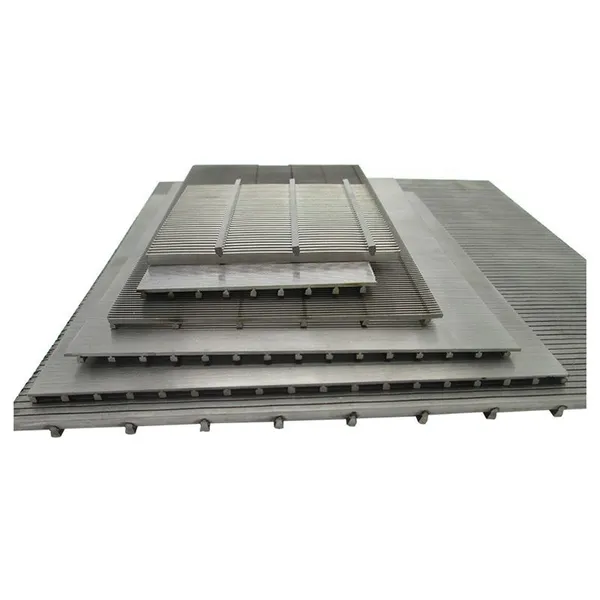 Read More
 -
Wedge Wire Candle Filter Elements: A Key Component in Industrial Solid-Liquid Separation
March 20, 2026Wedge Wire Candle Filter Elements: A Key Component in Industrial Solid-Liquid SeparationIn numerous industrial sectors such as che
Read More

Contact Us
Recommended Products
-
 Stainless Center Pipe, Inner Screen CustomNegotiableMOQ: 2 Sets
 -
Stainless Steel Wire Mesh Temporary Conical StrainerNegotiableMOQ: 2 Sets
-
Stainless Steel Wedge Wire Rotary Drum Screen FactoryNegotiableMOQ: 1 Set
-
Wedge Wire Screen Flat Panel Plates Stainless Steel CustomNegotiableMOQ: 1 Set
-
SS Filter Nozzle for WatertreatmentNegotiableMOQ: 10 Sets
-
Water Treatment Filter Nozzle for Ion Exchange CustomNegotiableMOQ: 10 Sets
-
Wedge Wire Center Pipe ScallopsNegotiableMOQ: 1 Set
-
V Wire Screen Pipe for Water TreatmentNegotiableMOQ: 1 Set
-
Wedge Wire Trommel Screen Stainless Steel CustomNegotiableMOQ: 1 Set
-
Header Lateral Distributor Screens Stainless Steel CustomNegotiableMOQ: 3 Sets
-
Johnson Wedge Wire Screen Catalyst Support Grid for Vessel InternalNegotiableMOQ: 1 Set
-
Polyurethane Screen Panels for Quarrying and MiningNegotiableMOQ: 1 Set
-
Hydro Sieve, Static Screen for Solid-Liquid Separation CustomNegotiableMOQ: 1 Set
-
Wedge Wire Resin Traps CustomNegotiableMOQ: 3 Sets
-
Stainless Steel Johnson Wedge Wire PanelNegotiableMOQ: 1 Set