 Business License
How to Choose the Right Wedge Wire Screen for Your Industry
Wedge wire screens are precision-engineered filtration components made from V-shaped stainless steel profile wires welded to support rods. They are widely used in water treatment, mining, petrochemical, food processing, and other industrial filtration systems where strength, durability, and non-clogging performance are essential.
What Is a Wedge Wire Screen?
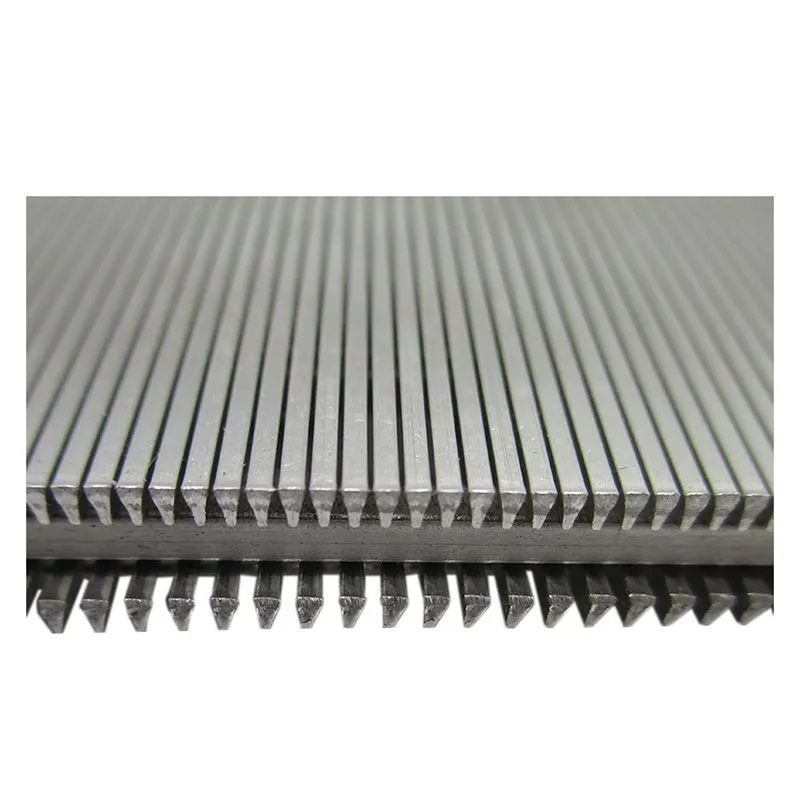
A wedge wire screen is a filtration element made from continuous V-shaped wires resistance-welded onto perpendicular support rods. The spacing between the profile wires forms precise slot openings that allow liquid or gas to pass while retaining solids.
The defining characteristic is the V-shaped profile. The slot is narrow at the surface and widens inward, which reduces clogging and improves flow performance.
Because of this geometry, wedge wire screens are often described as:
Non-clogging screens
Self-cleaning filtration elements
High open-area industrial screens
How Wedge Wire Screens Work
The working principle is based on controlled slot filtration:
Fluid approaches the screen surface
Solids larger than the slot are retained
Smaller particles pass through
The inward-widening slot reduces particle buildup
Continuous welding ensures structural rigidity under pressure
This design allows wedge wire screens to operate effectively in high-flow and high-solids environments without rapid blinding.
Key Design Components
Understanding the structure helps engineers select the correct configuration.
✔ Profile Wire (V-Wire)
Determines slot opening size
Influences strength and open area
Typically made from stainless steel (304, 316L, duplex)
✔ Support Rods
Provide mechanical stability
Maintain slot uniformity
Designed based on pressure and load requirements
✔ Slot Size
Slot openings typically range from:
0.05 mm (fine filtration)
0.1–0.5 mm (water treatment)
0.75–2 mm (dewatering and screening)
Slot size selection directly impacts flow rate, particle retention, and pressure drop.
Main Types of Wedge Wire Screens
Different applications require different geometries.
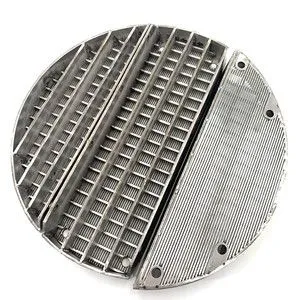
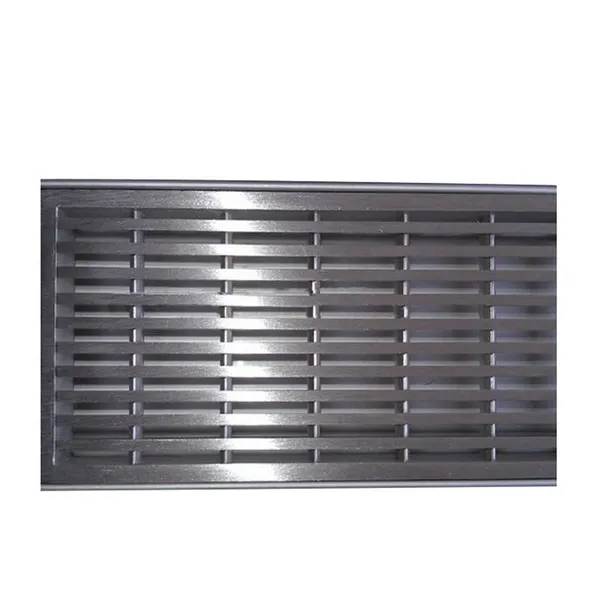
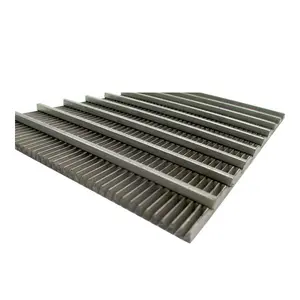
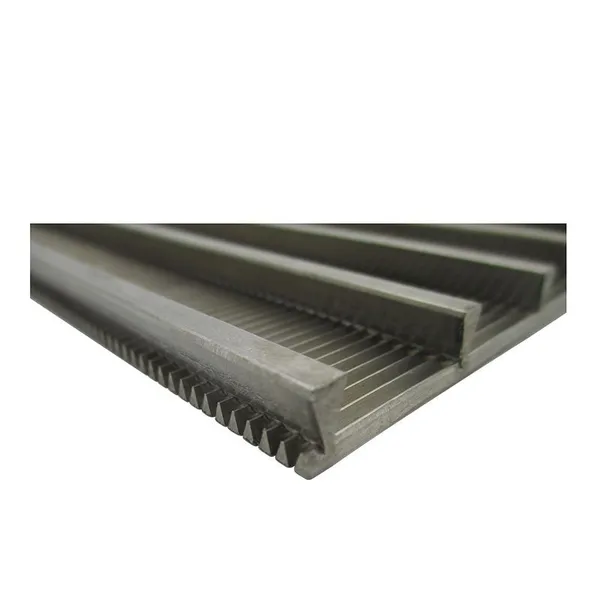
✔ Flat Panels
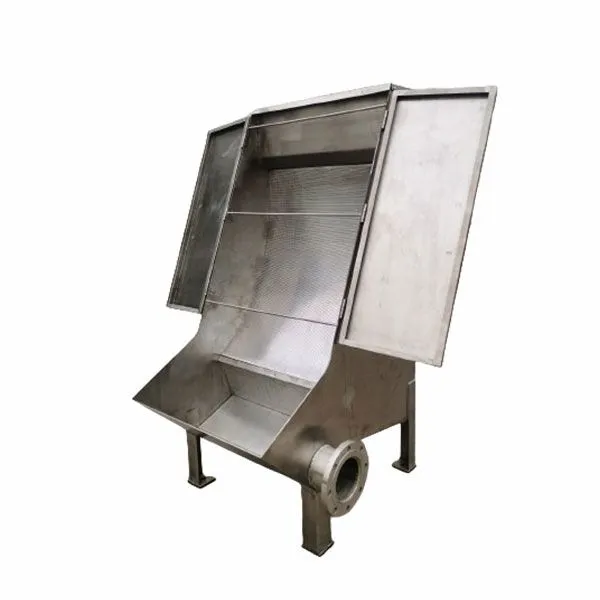
Used in static screens, sidehill screens, and gravity filtration systems.
Advantages: simple installation, high open area, easy cleaning.
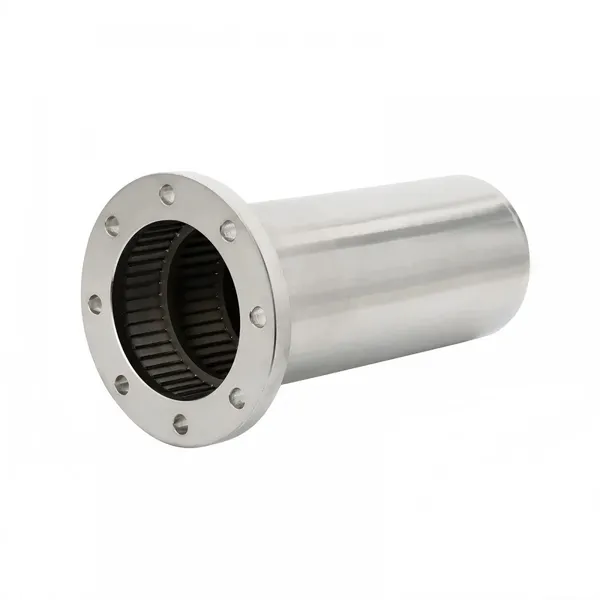
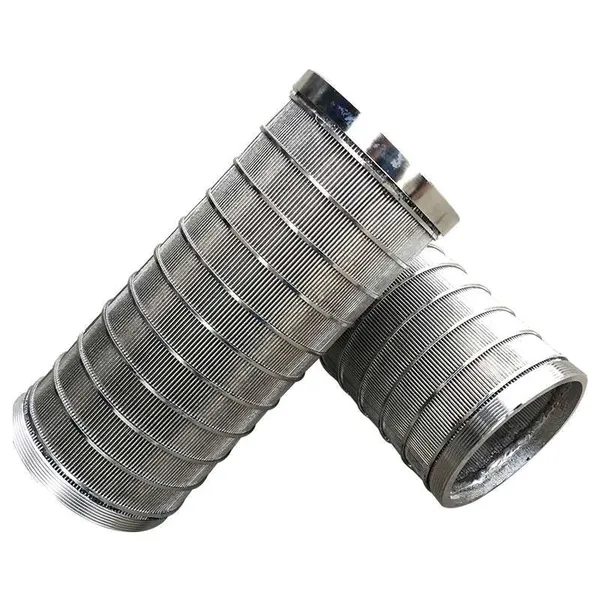
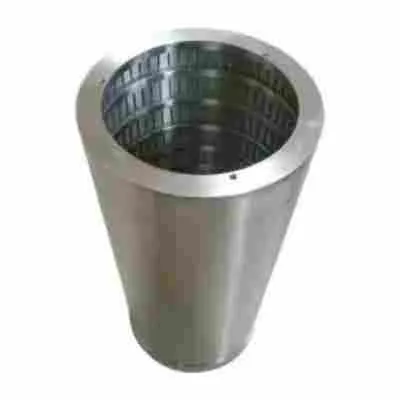
✔ Cylindrical Screens
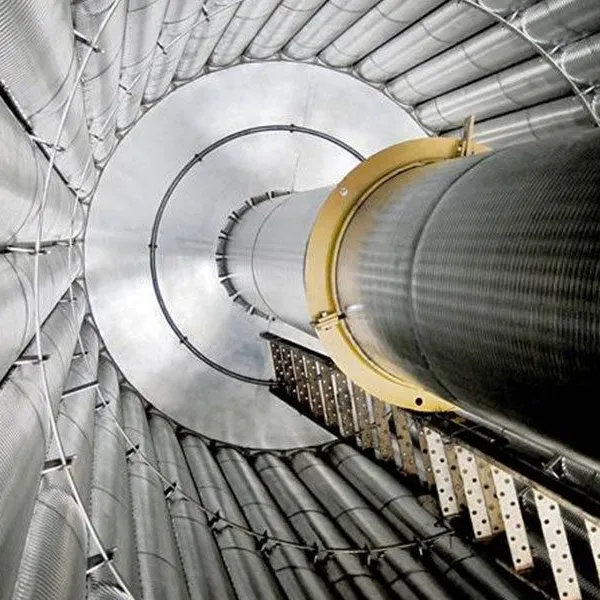
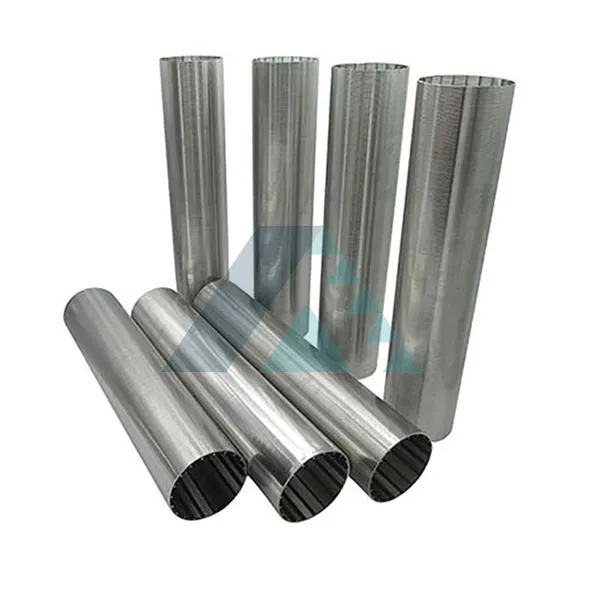
Used in water intake systems, sand filters, and pressure vessels.
Advantages: withstands internal or external pressure, uniform radial flow.
✔ Drum Screens
Used in wastewater treatment, food processing, and pulp and paper.
Advantages: high throughput, continuous operation.
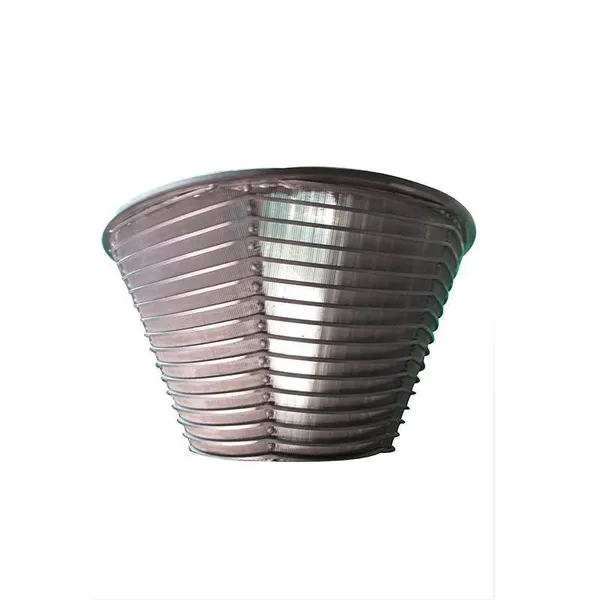
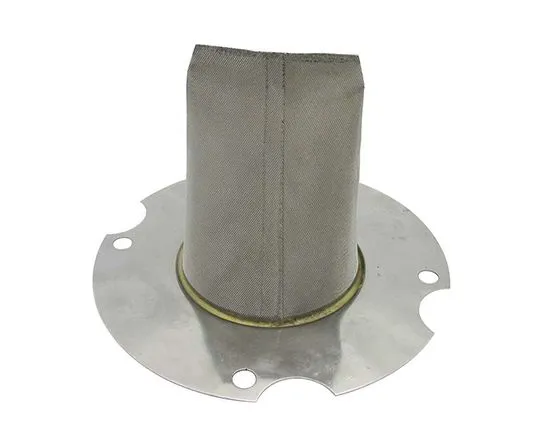
✔ Conical or Basket Screens
Used in centrifuges, mining dewatering, and solid-liquid separation.
Advantages: enhanced solids discharge, strong mechanical resistance.
Wedge Wire vs Other Filtration Media
| Feature | Wedge Wire Screen | Perforated Plate | Wire Mesh |
|---|---|---|---|
| Slot Precision | Very High | Moderate | Moderate |
| Non-Clogging Design | Yes | No | Limited |
| Structural Strength | High | High | Lower |
| Open Area | High | Medium | Medium |
| Customization | Extensive | Limited | Moderate |
Wedge wire is preferred when precise slot control, durability, and long service life are required.
Common Industrial Applications
✔ Water Treatment
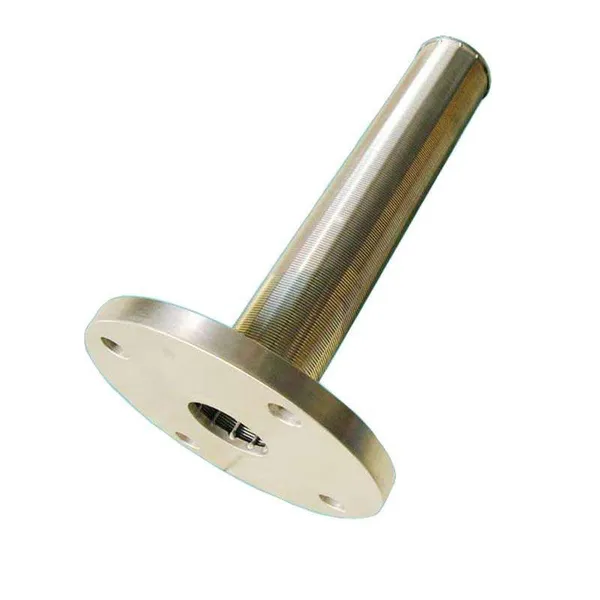
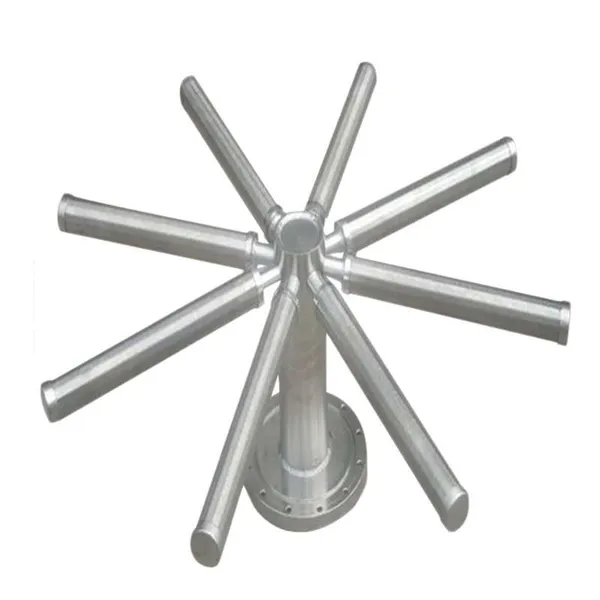
Sand filter laterals, intake screens, underdrain systems
✔ Mining & Mineral Processing
Dewatering screens, centrifuge baskets, slurry separation
✔ Chemical & Petrochemical
Catalyst support grids, reactor internals, resin traps
✔ Food & Beverage
Process water filtration, solid-liquid separation
How to Select the Right Wedge Wire Screen
Engineers typically evaluate the following:
✔ Required Slot Size
Based on particle size distribution and required retention efficiency
✔ Flow Rate
Higher flow rates require larger open area and stronger support structure
✔ Pressure Conditions
Internal vs external pressure, vacuum vs positive pressure systems
✔ Material Selection
304 stainless steel: general industrial use
316L: corrosive environments
Duplex stainless steel: high chloride content
✔ Cleaning Method
Backwashing, mechanical cleaning, or chemical cleaning
Proper specification prevents premature failure and reduces maintenance costs.
Why Wedge Wire Screens Are Considered Non-Clogging
The V-shaped profile creates a slot that widens inward. When particles attempt to enter the slot, they are less likely to wedge permanently because the internal opening is larger than the surface gap.
This design significantly reduces:
Screen blinding
Pressure buildup
Maintenance frequency
Maintenance and Service Life
Wedge wire screens offer long operational life when:
Correct slot size is selected
Material matches the chemical environment
Regular cleaning is performed
In many industrial systems, stainless steel wedge wire components operate for several years without replacement.
Frequently Asked Questions
1. Why are wedge wire screens non-clogging?
The slot is narrow at the surface and widens inward, reducing particle accumulation compared to straight-slot designs.
2. What industries use wedge wire screens?
Water treatment, mining, chemical processing, food production, and petrochemical industries.
3. How do I choose the correct slot size?
Based on the smallest particle to retain, flow rate, and system pressure conditions.
4. Are wedge wire screens better than perforated plates?
For precision filtration and non-clogging performance, wedge wire screens offer superior slot accuracy and longer service life.
Wedge wire screens are precision-engineered filtration components designed for durability, controlled slot accuracy, and non-clogging performance. Their structural integrity and adaptability make them suitable for a wide range of industrial applications.
Selecting the appropriate slot size, material, and configuration ensures optimal performance and long service life in demanding environments.
📌 For more technical specifications and customized solutions, visit:
https://www.uboscreen.com/news/wedge-wire-screens-design.html
Recently Posted
-
How to Choose the Right Cartridge Filter Housing: 3 Critical Steps Every Industrial Buyer Must Get R
August 14, 2026How to Choose the Right Cartridge Filter Housing: 3 Critical Steps Every Industrial Buyer Must Get RightThe global industrial filt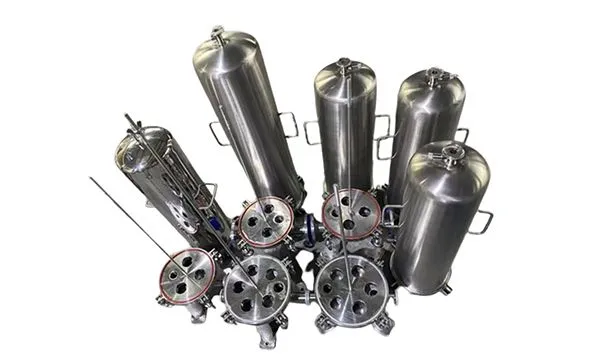 Read More
 -
Stainless Steel Wedge Wire Screen Filter Nozzle – Reliable Filtration for Water Treatment Systems
April 1, 2026Stainless Steel Wedge Wire Screen Filter Nozzle – Reliable Filtration for Water Treatment SystemsAre you looking for a filtr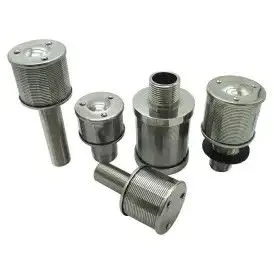 Read More
 -
Sieve Bend or Hydro Sieve? How to Choose the Right Curved Screen
March 27, 2026Sieve Bend or Hydro Sieve? How to Choose the Right Curved ScreenA sieve bend screen is a curved wedge wire screening pa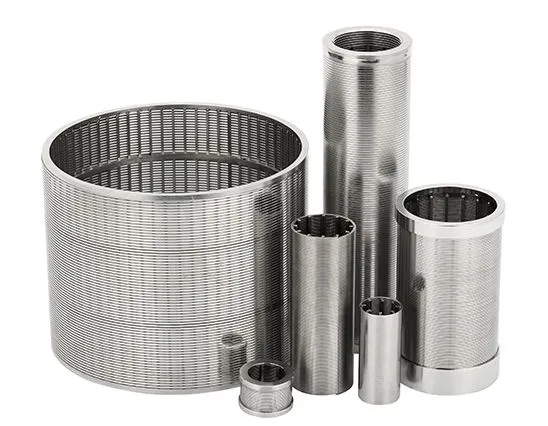 Read More
 -
Wedge Wire Candle Filter Elements: A Key Component in Industrial Solid-Liquid Separation
March 20, 2026Wedge Wire Candle Filter Elements: A Key Component in Industrial Solid-Liquid SeparationIn numerous industrial sectors such as che
Read More

Contact Us
Recommended Products
-
 Stainless Center Pipe, Inner Screen CustomNegotiableMOQ: 2 Sets
 -
Stainless Steel Wire Mesh Temporary Conical StrainerNegotiableMOQ: 2 Sets
-
Stainless Steel Wedge Wire Rotary Drum Screen FactoryNegotiableMOQ: 1 Set
-
Wedge Wire Screen Flat Panel Plates Stainless Steel CustomNegotiableMOQ: 1 Set
-
SS Filter Nozzle for WatertreatmentNegotiableMOQ: 10 Sets
-
Water Treatment Filter Nozzle for Ion Exchange CustomNegotiableMOQ: 10 Sets
-
Wedge Wire Center Pipe ScallopsNegotiableMOQ: 1 Set
-
V Wire Screen Pipe for Water TreatmentNegotiableMOQ: 1 Set
-
Wedge Wire Trommel Screen Stainless Steel CustomNegotiableMOQ: 1 Set
-
Header Lateral Distributor Screens Stainless Steel CustomNegotiableMOQ: 3 Sets
-
Johnson Wedge Wire Screen Catalyst Support Grid for Vessel InternalNegotiableMOQ: 1 Set
-
Polyurethane Screen Panels for Quarrying and MiningNegotiableMOQ: 1 Set
-
Hydro Sieve, Static Screen for Solid-Liquid Separation CustomNegotiableMOQ: 1 Set
-
Wedge Wire Resin Traps CustomNegotiableMOQ: 3 Sets
-
Stainless Steel Johnson Wedge Wire PanelNegotiableMOQ: 1 Set